Vet & Dentist Games for Kids
BANDK SOFT - GAMES FOR KIDSAdventure
3.911.00 Reviews
- Version
- 1.1.0
- Installs
- 1.00M
- Age Rating
- Everyone
Screenshots
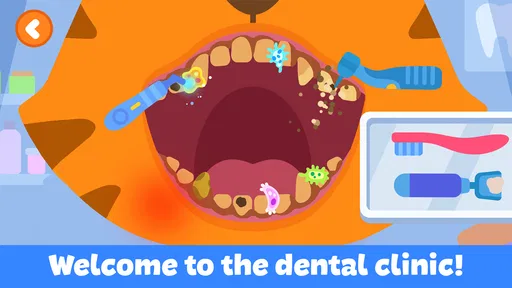
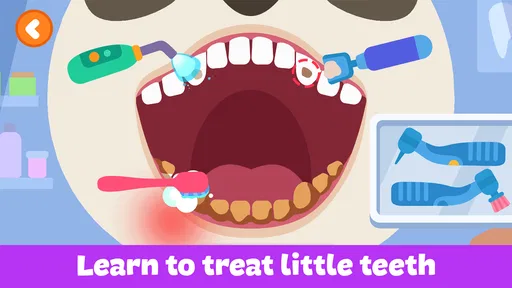
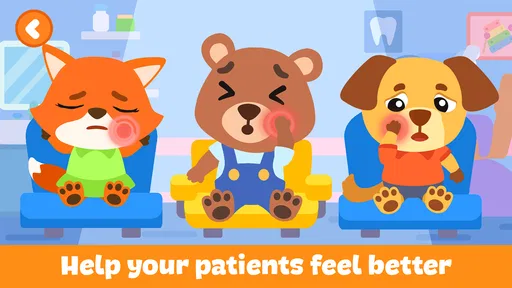
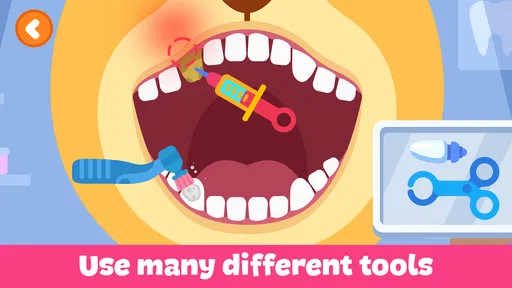
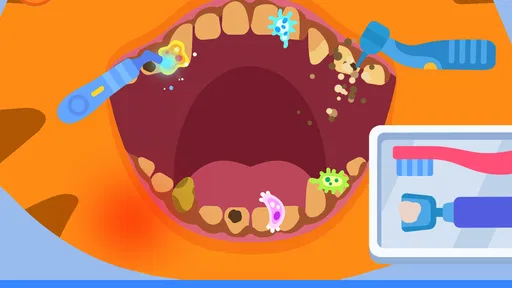
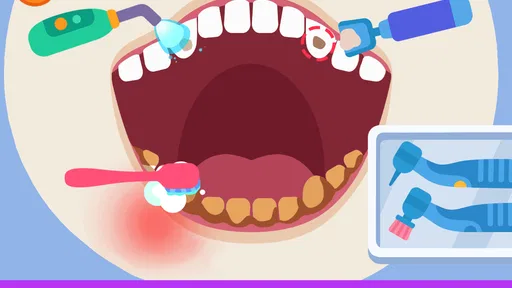
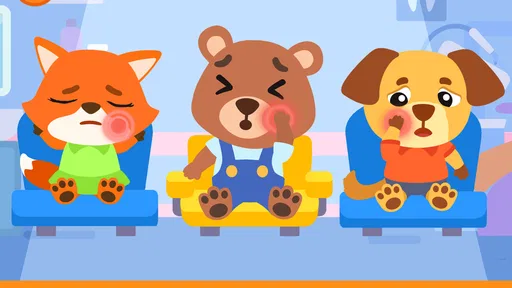
Our Review of Vet & Dentist Games for Kids
 Analysis by Appyee
Vet & Dentist Games for Kids is a free adventure game from BANDK SOFT - GAMES FOR KIDS that turns a pet clinic into a simple play space. I approached it as a short, child-friendly activity rather than a deep simulation, and that distinction matters. The main appeal is the chance to act like a veterinarian, especially while helping animal patients with dental problems. It is easy to understand, colorful in spirit, and aimed at children who enjoy caring for pets more than competing for high scores.
The game is available for Everyone and runs on Android devices using version 6.0 or later. It has passed the one-million-install mark, which suggests that the idea has found a sizeable audience, although its average rating sits at 3.9 from roughly one thousand ratings. I would read that combination as a sign of broad interest with some room for improvement, not as a guarantee that every child will love it.
What the pet clinic experience feels like
My first impression is that this is best used as a guided, bite-sized game. The store summary presents it as a pet doctor experience with a focus on fixing teeth, and the dental angle gives the game a more specific identity than a general animal-care title. Instead of asking a child to learn a complicated management system, it puts the emphasis on looking after an animal and completing an approachable treatment task.
That makes it a natural fit for a quiet moment at home, a brief distraction during travel, or a supervised introduction to pretend-play games. A child who likes toy doctor sets, animal cartoons, or role-playing as a helper will probably understand the premise quickly. The game also works well for parents who want something less aggressive than many action-oriented adventure games.
At the same time, I would not choose it for a child expecting a large world to explore, a long story, or the strategic depth of a full veterinary simulator. The adventure label describes the theme and activity, but the experience is centered on clinic-style interactions. Children who need constant novelty may finish the most interesting part quickly and look for another game.
The strongest reason to try it is its clear role-play loop: identify an animal’s problem, perform a caring action, and see the patient move toward recovery. That simple structure gives a first-time player an immediate purpose. It can also encourage patience and careful tapping, especially when an adult talks through what each treatment step is meant to do.
Who will get the most from it
I see the best audience as younger players who are still building confidence with touch controls. The game’s subject is familiar, and the idea of helping an animal provides motivation without requiring the player to read a long explanation. It is also suitable for a child who enjoys repeating a favorite activity, because pretend-care games often work through routine rather than surprise.
Parents should still treat the Everyone rating as a starting point, not a substitute for checking the game personally. A child’s reaction to dental-themed play can vary. Some children find tooth treatment funny or interesting, while others may prefer grooming, feeding, or general pet-care activities. I would let the child see the opening interaction and then decide whether the theme feels comfortable.
The game is free to install, but it includes optional purchases priced from $1.99 to $12.99 per item. That is important in a family setting. I recommend opening the game together the first time, checking how purchase prompts appear, and using the device’s purchase controls before handing it over for independent play. This is not a criticism of the concept; it is simply sensible preparation for any free game intended for children.
Getting started without making the first session confusing
Installation should be straightforward on a compatible Android phone or tablet. The current version is 1.1.0, and the minimum operating-system requirement is Android 6.0. If you are setting it up on an older family device, checking the Android version before asking a child to wait for the download can prevent an avoidable disappointment.
Once it opens, I would keep the first session focused. Rather than explaining every possible option, I would invite the child to choose the animal-care activity that catches their attention and then watch what changes on screen. In games for young players, the first useful lesson is often not a written instruction but the relationship between tapping an object and seeing the patient respond.
A helpful routine is to place the device on a stable surface and use one finger for deliberate taps. Children often tap rapidly when they are unsure, which can make it harder to tell whether an action worked. Slowing down turns the opening into a small observation exercise: look at the patient, locate the relevant tool or object, tap once, and wait for the result.
I also recommend playing beside the child for the first meaningful attempt. You do not need to take over. Ask questions such as, “What do you think needs help?” or “Which item looks connected to the teeth?” This keeps the child in control while making the clinic theme more understandable. It is a better introduction than giving a sequence of commands, because the game becomes a shared pretend scenario rather than a test.
Reaching the first successful action
The first success should be treated as a small care routine, not merely as a screen to clear. Let the child notice the animal, identify the dental problem, and select the matching action. If the game highlights a usable item, encourage the player to try that item first instead of tapping everything randomly. This creates a simple habit that remains useful in later clinic activities.
One practical tip is to narrate the action in everyday language: “The pet needs help with its teeth, so we are going to use the dental tool.” That wording connects the visual interaction with the role-play idea. It also helps a child who may not yet understand why a particular object is available. The goal is not to teach real dentistry, but to make the game’s pretend logic easy to follow.
When the patient reacts positively, pause for a moment before moving on. Young players can miss the sense of accomplishment if an adult immediately pushes them toward the next screen. Letting them see the result reinforces the connection between careful action and helping the animal. In my view, this is where the game has more value than a random tapping toy.
If the first attempt does not work, I would avoid grabbing the device straight away. Ask the child to look again at the animal and the available objects. Try one slower action, then reassess. This approach is especially useful because it turns confusion into a manageable problem. The child learns that a failed tap is not a failure of the whole game; it is a reason to observe the scene more carefully.
For a busy afternoon, the first successful treatment can also serve as a natural stopping point. You do not have to turn the game into a long session. Finishing one caring task and putting the device away can leave the child with a clear, positive experience instead of tiredness or frustration.
Small details that improve the experience
One of the less obvious strengths of this kind of game is that it can support different levels of adult involvement. A younger child may need someone to point out where to begin, while an older child can usually experiment independently. I would not use the same approach for every player. Start with shared play, then step back once the child can recognize the treatment goal and choose an appropriate action.
Another useful trade-off is repetition. Repeating a familiar dental-care sequence may look limited to an adult, but repetition can be exactly what a young player wants. It gives the child a chance to improve touch accuracy and remember the order of actions. If the player is already comfortable with the routine, however, the game may feel too narrow compared with a broader animal-care title.
The clinic setting also creates an opportunity for gentle conversation. While playing, a parent can explain that the game is pretend and that real tooth problems should be handled by a qualified dentist or veterinarian. That distinction is worth making because the game simplifies care for entertainment. Its actions can inspire curiosity, but they should not be treated as real medical instructions.
I would also keep an eye on the device itself. A phone may be harder for a child to use accurately than a larger tablet, particularly during tool-based interactions. A stable screen, comfortable brightness, and enough space around the child’s hands can make the difference between a calm session and repeated accidental taps. These are simple adjustments, but they matter more in a touch game aimed at children than they do in a menu-heavy adult title.
Where first-time players may hesitate
The most likely confusion comes from interpreting the scene rather than understanding the overall idea. A child may know that they are playing doctor but still not know which object is relevant. I would encourage looking for visual relationships: the animal’s mouth, the dental problem, and the tool that appears designed for that area. This is more effective than tapping every visible item in quick succession.
Another possible sticking point is the difference between a decorative object and an interactive one. Children naturally assume that anything on the screen should respond. If something does not react, explain that the game may be waiting for a different choice instead of suggesting that the device is broken. This keeps the child calm and teaches them to use feedback from the screen.
Some players may also expect a traditional adventure with movement, collecting, or a map. I would set expectations before installation: this is an animal-doctor adventure built around clinic tasks, not an exploration game. That small explanation can prevent disappointment and helps the child appreciate what the game is actually offering.
Because the game is free with optional purchases, purchase prompts may be another point where a child needs guidance. I would establish a clear family rule before play begins: the child can explore the available activity, but any purchase requires an adult. This is especially important when a game is being used as a quick distraction and the adult is tempted to leave the child playing alone.
The rating and review pattern also suggests a balanced approach. A 3.9 average from about one thousand ratings is respectable but not exceptional, and the game has around eleven written reviews. I would therefore try it personally before recommending it as a long-term favorite. The concept is easy to understand, but individual children will differ in how much variety and challenge they expect.
How it compares with other choices for children
Compared with a general pet simulator, this game has a clearer starting point. A broad pet game may offer feeding, bathing, dressing, or decorating, while this one gives the child a more focused medical role. That focus is helpful when a player gets overwhelmed by too many choices. It is less helpful when the child wants to care for an animal in several different ways.
Compared with educational dental apps, it appears more playful and less like a lesson. I prefer that approach for a short role-playing session, because the child can engage through imagination instead of feeling as if they are completing homework. However, a parent looking for detailed tooth-brushing guidance or structured health education should choose a dedicated educational resource instead.
It also differs from action adventure games by replacing combat and time pressure with helping behavior. That makes it a calmer alternative for a child who enjoys adventure themes but does not need enemies or competition. The trade-off is that players who want fast reactions, scores, or a strong sense of progression may find the clinic routine too gentle.
For a family deciding between this and a larger, more feature-heavy game, I would use the child’s attention style as the deciding factor. Choose this one when the child likes animal role-play, short tasks, and visible care outcomes. Choose something else when they want exploration, a substantial story, multiplayer play, or a wide range of pet activities in one package.
What to try after the first treatment
After the child understands the basic dental interaction, the next step is to let them lead. Ask them to explain what the animal needs and why they selected a particular tool. This turns passive tapping into a small decision-making exercise without adding rules that the game may not have. It is also a useful way to see whether the child understands the clinic scenario or is simply copying gestures.
If the player enjoys the experience, keep sessions short enough that the activity remains pleasant. A child who is still learning the controls may benefit from repeating one task on another day, while a confident player may quickly want to see what else the clinic offers. I would follow the child’s interest rather than forcing a fixed schedule.
Parents can also use the game as a bridge to real-world care conversations. After play, talk about being gentle with animals, asking an adult for help, and visiting professionals when a pet is unwell. Keep the discussion simple and avoid presenting the game’s pretend procedures as a real treatment plan. This gives the activity a useful context without asking it to be something it was not designed to be.
The developer, BANDK SOFT - GAMES FOR KIDS, has positioned the title clearly around children and animal care. The free entry point makes trying it easy, while the optional purchases mean families should remain involved in the setup. I would not install it expecting a large, endlessly varied adventure, but I would consider it a reasonable choice for a child who wants to play veterinarian and enjoys dental-care scenarios.
My final view is cautiously positive. Vet & Dentist Games for Kids succeeds when it stays close to its simple idea: give a child an animal patient, a problem to notice, and a caring action to complete. The experience is most rewarding when an adult helps with the first session and then allows the child to take over. For a first-time player, the best path is simple: install it on a compatible device, play beside the child, complete one careful treatment, and decide from that first success whether the available variety is enough.
I would recommend it to families seeking a gentle, free-to-start adventure activity for younger children, especially those drawn to pet doctors and pretend clinics. I would skip it for children who need complex exploration, competitive goals, or a broad simulation of veterinary work. With that expectation set, Vet & Dentist Games for Kids can be a friendly short-session game rather than an overpromised substitute for a full pet simulator or dental-learning app.
Verdict
Strengths of Vet & Dentist Games for Kids
- Fun way to learn basic pet care and dental hygiene
- Simple controls suitable for younger children
- Bright graphics and friendly animal characters
- Short activities help maintain children's attention
- Encourages empathy and responsibility toward pets
Limitations of Vet & Dentist Games for Kids
- Some activities may feel repetitive after extended play
- Limited challenge for older children
- May include frequent prompts to watch ads or upgrade
- Requires supervision to explain real veterinary procedures
- Gameplay can be less engaging without sound
Similar Picks in This Category
View All
Roblox
Roblox Corporation4.2

Pokémon GO
Niantic, Inc.3.5

Ninja warrior: legend of adven
TOH Games4.6

Ninja Arashi
Black Panther4.6

Eyes - The Horror Game
Fearless Games sp. j.4.5

Critical Action:Gun Strike Ops
FPS Shooter & Action Game4.3
Frequently Asked Questions
What is Vet & Dentist Games for Kids?
Vet & Dentist Games for Kids is an educational role-playing app designed for young children who enjoy caring for animals. It combines simple veterinary and dental activities, such as examining pets, cleaning teeth, treating minor problems, and choosing basic tools. The colorful interface and short tasks make it approachable for preschool and early elementary users while introducing ideas about kindness, hygiene, and responsible pet care.
Is Vet & Dentist Games for Kids suitable for my child’s age?
The game is generally aimed at preschool and younger elementary-age children, especially those who enjoy pretend-play activities involving animals. Younger children may need help understanding instructions or navigating menus, while older children may find the gameplay easy but entertaining. Parents should check the age recommendation on the Google Play Store or App Store, as supported ages and content descriptions can vary by device and app version.
Does the game require an internet connection?
Basic gameplay may be available without a constant internet connection once the app has been installed, which is convenient for travel or offline play. However, certain functions could depend on connectivity, including advertisements, optional purchases, updates, analytics, or links to other content. It is best to open the game once while connected, review its behavior, and use parental controls before allowing independent play.
Does Vet & Dentist Games for Kids contain ads or in-app purchases?
The availability of advertising and optional purchases can depend on the version, platform, region, and developer settings. Some free children’s games display ads or offer extra animals, tools, locations, or activities through in-app purchases. Before downloading, parents should review the store listing carefully and protect purchases with device-level authentication. Playing together initially also helps identify whether the advertising experience is appropriate for the child.
Is this game educational, and can it replace real veterinary or dental advice?
The app offers light educational value through pretend medical and dental routines, helping children become familiar with caring for animals and keeping teeth clean. Its activities are simplified for entertainment and should not be treated as professional instruction. It cannot replace advice from a veterinarian, dentist, or parent. Use the game as a conversation starter about gentle handling, hygiene, and seeking adult help when a pet is unwell.
Play our best games!


